I do not believe that in GB&I that golf simulator golf will overtake rounds played on a golf course.
We have sufficient green grass golf venues that capacity has not been reached – this is different in South Korea where there are around 830 golf courses only and 6,000 golf simulator facilities. In GB&I there are over 3,000 golf courses – we have the ability to get more people onto our existing green grass golf infrastructure. It is not a capacity problem.
The UK has many of the leading golf courses quality, and a ‘must-play desire’. Accessibiity is also not a problem – many private member clubs welcome visitors and many of these venues are also operated commercially – the eight golf courses for example in St Andrews under the St Andrews Links Trust, which includes the Home of Golf – the Old Course. There are many others around the country that have hosted major championships, and the Ryder Cup that are accessible to golfers. This is part of the pull factor for green grass.
Golf in GB&I also has advantage of spanning two islands (GB and the island of Ireland) meaning that there are stunning Links courses where you can get access to wonderful, natural golf courses framed by the coastline and with stunning views. The ability to get outside is something that cannot be under valued for our health – mental and physical.
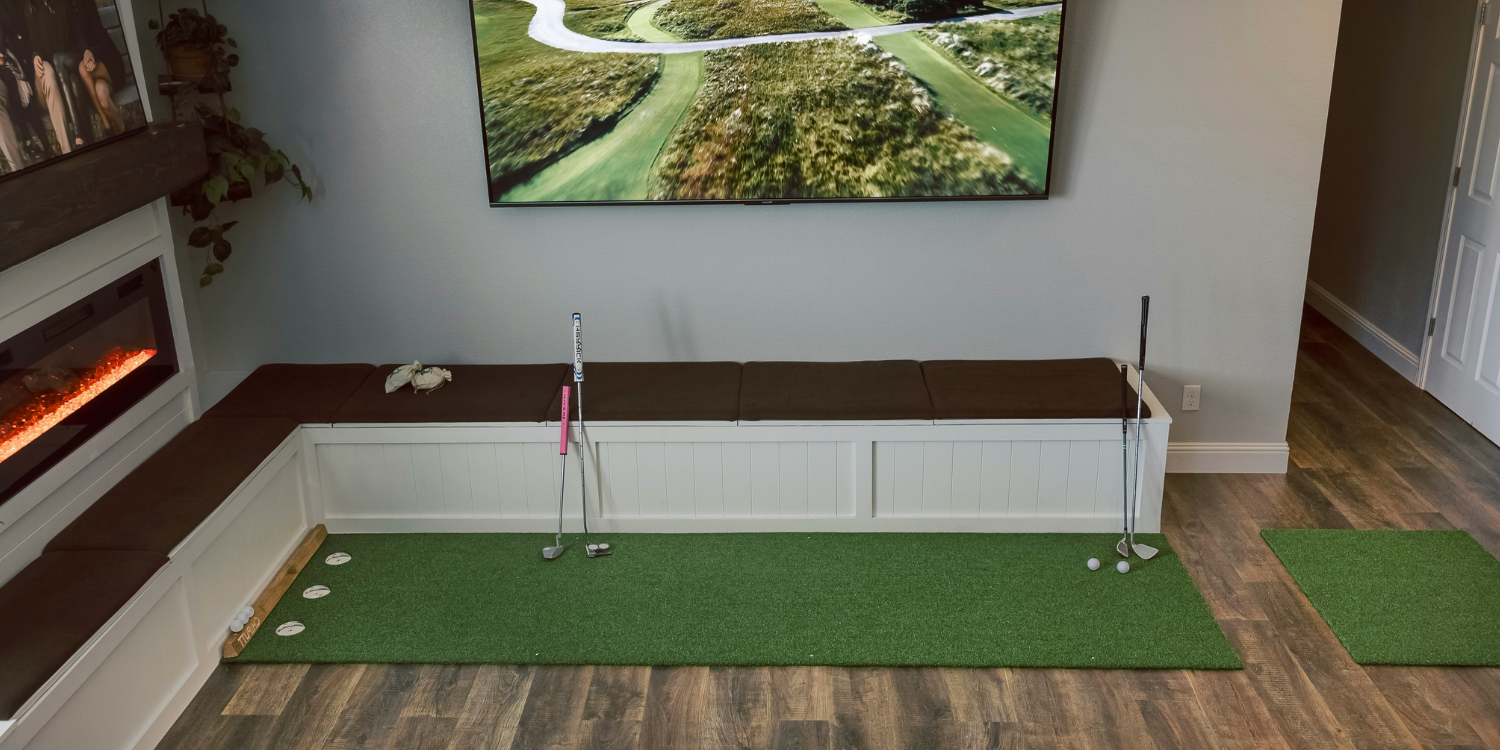
Golf Simulators are a wonderful entrance into the sport and leisure activity of golf– they enable golfers and potential golfers to play with their friends without the 3 ½ hour play commitment plus travel time. They allow golf to be played in urban locations and are used by core golfers to practice their golf to enable them to be prepared and somewhat practised when they get to go to a golf course. There are many golfers and emerging players who are golf simulator players only, but there are also a huge number of multi-format players. These players will use simulators as an alternative to green grass until they can get onto green grass again.
If I had a choice and could only play one form of golf – it would be green grass and outdoors. I am looking forward to seeing golfer numbers and golfer rounds significantly increase in golf simulators. It is right for the sport to develop this way – and the companies investing in the technology are creating more realistic and better experiences constantly – with moving floors and fabulous digital graphics being the next horizon.
However, this does not replace the sights, sounds, smells and texture of being on a golf course. I do not see rounds on simulators overtaking total rounds on a golf course in GB&I any time soon.
Speaking personally, I’m very comfortable with that. I am a casual golfer in West Sussex where there are plenty of courses, and the reasons I play are simple: I like getting outside, I enjoy the walk, and I value having a few hours where I am properly switched off and present with the people I’m playing with. Those things are hard to replicate indoors, no matter how good the technology gets, and they are a big part of why green grass golf still feels special, almost like a social oasis in increasingly busy lives.
That said, I think virtual golf plays an incredibly important role. It opens the game up to people who might otherwise struggle to access it, whether that is because of work, family commitments, weather or geography. I am particularly interested in its potential as a gateway for women and juniors. Time is often cited as a key barrier for women’s participation, and shorter, more flexible formats could genuinely help. For juniors, simulator golf can be a fun, social introduction to the game. My hope is that virtual golf does not replace traditional golf, but helps more people eventually find their way onto the course.

I do not think virtual golf rounds will overtake on course rounds in the UK in the next few years. We already have a high concentration of courses, a relatively forgiving climate compared to parts of northern Europe, and a strong culture built around getting outside to play sport. For many players, a round of golf is not just about hitting shots, it is about walking, being in nature, and spending a few uninterrupted hours with friends or family. Virtual golf solves some genuine problems around time, weather and location, but it does not replace all of that for most people.
Speaking personally, I’m very comfortable with that. I am a casual golfer in West Sussex where there are plenty of courses, and the reasons I play are simple: I like getting outside, I enjoy the walk, and I value having a few hours where I am properly switched off and present with the people I’m playing with. Those things are hard to replicate indoors, no matter how good the technology gets, and they are a big part of why green grass golf still feels special, almost like a social oasis in increasingly busy lives.
That said, I think virtual golf plays an incredibly important role. It opens the game up to people who might otherwise struggle to access it, whether that is because of work, family commitments, weather or geography. I am particularly interested in its potential as a gateway for women and juniors. Time is often cited as a key barrier for women’s participation, and shorter, more flexible formats could genuinely help. For juniors, simulator golf can be a fun, social introduction to the game. My hope is that virtual golf does not replace traditional golf, but helps more people eventually find their way onto the course.

While the Korean experience is well documented, for many years the roll out of indoor simulator golf did not repeat the success in South East Asia. However, a combination of COVID and new technology have brought indoor golf to new levels in SE Asia in the years since the pandemic.
In general, as Sporting Insights figures show, COVID and its aftermath brought more people to the game throughout SE Asia. From there the growth into indoor golf and range golf has increased as new golfers wanted to continue their new habit in more convenient locations. Indoor locations present an easy, time-controlled practice area within the urban city location, allowing golfers to get a fix over a lunch break or during drinks before dinner. Air conditioned and sheltered from rainstorms in the tropical areas of SE Asia, indoor and simulator rounds can also present a more comfortable environment than outside where a whole new set of apparel, often technical and often expensive, is required.
Experienced golfers are also being presented with a whole new set of measurements and metrics on their golf swing through launch monitors and other technology. The more technical golfer is attracted to these metrics which are possible but harder to measure on the course.
Another reality in places like Singapore is that land scarcity is resulting in reduction of golf courses (per golfing capita) and high cost golf as a walk in or member's guest. However, right across the border in Malaysia and Indonesia and in Thailand and Vietnam, there is a great variety of golf. As a result, there is a whole industry of indoor golf instruction which packages the outdoor experience as a pathway to becoming a golfer. Indoor in Singapore and outdoor in Malaysia for example is a common trend. This may be the reason that new research done by the Singapore Golf Association in partnership with Sporting Insights shows that non-registered golfers far outnumber registered golfers. There is a large population learning the game in Singapore, playing when they can in Singapore but also most likely crossing borders to other countries with more numerous and less expensive golf courses.

This is a tricky question, as it comes down to how a virtual round is classified.
I believe, as evidenced by the figures, off course will outgrow traditional golf in terms of participation but it will take a while for the virtual rounds to overtake the on-course rounds in raw terms. Simulator golf currently sits in what I would describe as a casual, social, introductory space, with a younger demographic driving participation. That channel can currently be seen as a feeder channel, or part of the journey to traditional golf participation.
There are a number of factors that will increase the virtual rounds played number, and I do believe there will be a cross over point where virtual rounds will exceed on course, traditional golf rounds played.
As seen in the UK the early part of this year the weather has been incredibly wet, meaning courses have been closed, or the actual on-course experience has been poor. This will drive demand for virtual golf, and we are seeing the various pieces of technology becoming more affordable, and an enhanced ‘user experience’ narrowing the gap to traditional golf with moving platforms and different lies available.
The advent of TGL on visible mainstream media has validated that virtual golf has a place within golf’s ecosystem, and I think we will see a split in how virtual golf develops. Commercial offerings will develop and cater for social interaction and a ‘fun’ environment to experience golf, and then constant evolution of technology, to allow the indoor golf experience to mimic the outdoor, on course experience will drive more committed, traditional golfers to play virtually.
As it stands, I believe that off course participation will continue to grow, but at the moment, on course rounds played will be higher that virtual rounds. I do however believe there will be a tipping point, as the game evolves, a new generation takes up the game, and factors such as weather/cost/ease will have a greater impact on the traditional golfers on course rounds played.